Deborah A. Sivas (Calif. Bar No. 135446)
Michael R. Lozeau (Calif. Bar No. 142893)
EARTHJUSTICE LEGAL DEFENSE FUND
Owen House - 553 Salvatierra Walk
Stanford, California 94305-8620
Telephone: (650) 723-0325
Facsimile: (650) 725-8509
Attorneys for Petitioner
SUPERIOR COURT FOR THE STATE OF CALIFORNIA
IN AND FOR THE COUNTY OF MONTEREY
VOICES OF THE WETLANDS, Petitioner,
v. CALIFORNIA STATE WATER RESOURCES CONTROL BOARD; and
CALIFORNIA REGIONAL WATER QUALITY CONTROL BOARD ñ
CENTRAL COAST REGION,
Respondents.
_________________________________________
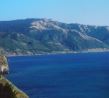
DUKE ENERGY MOSS LANDING, LLC; and
DUKE ENERGY NORTH AMERICA,
Real Parties-in-Interest.
PETITION FOR WRIT OF MANDATE BASED ON THE FEDERAL
WATER POLLUTION CONTROL ACT (33 U.S.C. ß 1251, et
seq. and Cal. Civ. Pro. Code ß 1094.5)
Petitioner Voices of the Wetlands petitions this Court
for a writ of mandate pursuant to California Code of
Civil Procedure ("CCP") section 1094.5 directing
Respondents California State Water Resources Control
Board ("State Board") and Regional Water Quality Control
Board, Central Coast Region ('Regional Board') to set
aside and vacate Regional Board Waste Discharge
Requirements Order No. 00-041, which illegally authorized
Duke Energy Moss Landing, LLC/Duke Energy North America
('Duke Energy') to withdraw up to 1.224 billion gallons
of water per day from Moss Landing Harbor for use as
cooling water flow in the Moss Landing Power Plant
('MLPP') without requiring that the plantís
cooling water intake structures ('CWIS') reflect the best
technology available ('BTA') for minimizing adverse
environmental impacts, as mandated by section 316(b) of
the Federal Water Pollution Control Act, 33 U.S.C.
ß 1326(b) (hereinafter 'Section 316(b)'). This
petition also asks the Court to vacate State Board Order
WQ No. 01-10, which upheld Regional Board Order No.
00-041. Petitioners allege:
INTRODUCTION
1. This action challenges Respondents failure to
comply with the Federal Water Pollution Control Act (the
"Clean Water Act" or "CWA"), 33 U.S.C. ß 1251 et
seq., by issuing a National Pollutant Discharge
Elimination System ("NPDES") permit to Duke Energy for
the MLPP that does not reflect or require use of the best
cooling water intake structures technology available to
minimize adverse environmental impacts on Elkhorn Slough,
Moss Landing Harbor, and the Monterey Bay National Marine
Sanctuary.
2. Duke Energy's predecessor-in-interest, Pacific Gas
& Electric, constructed Units 1 through 5 of the MLPP
in 1950 and operated these units until 1995, when they
were retired. These units were designed to use a
once-through cooling water system technology.
3. In 1968, Pacific Gas & Electric installed
additional Units 6 and 7 at the MLPP. These units were
also designed to utilize a once-through cooling water
system technology. After Units 1 through 5 were taken out
of operation, Units 6 and 7 continued to operate pursuant
to NPDES Permit No. CA0006254, which was reissued by the
Regional Board on February 10, 1995 pursuant to Waste
Discharge Requirements Order No. 95-22.
4. Duke Energy proposes to expand the existing MLPP by
adding two new 530- megawatt ('MW') natural gas-fired,
combined-cycle generating units to the facility (new
Units 1 and 2) and by upgrading existing Units 6 and 7.
As a result of this proposed expansion, power generating
capacity at the MLPP will increase from its current 1,500
MWs to approximately 2,590 MWs. Despite the fact that
proposed new Units 1 and 2 will be newly constructed,
Duke Energy intends to use essentially the same
once-through cooling water technology utilized for units
at the facility that are now over one half a century
old.
5. On October 27, 2000, pursuant to Order No. 00-041,
the Regional Board again reissued NPDES Permit No.
CA0006254 to Duke Energy, this time authorizing the
intake, use and subsequent discharge of as much as 1.224
billion gallons of marine cooling water for the
once-through cooling system at the expanded MLPP. As the
lead state agency for approval of the MLPP expansion, the
California Energy Commission (ìEnergy
Commissionî) prepared and certified an
environmental impacts analysis for the project which
found that the entrainment of large numbers of biological
organisms in the intake water of the proposed new cooling
system constitutes a significant adverse impact to
Elkhorn Slough and Moss Landing Harbor.
6. Notwithstanding this finding, Regional Board Order
No. 00-041 determined that BTA for the cooling water
system at the expanded MLPP is the once-through cooling
technology presently used at the facility and that the
cost of alternative cooling system technologies is
ìwholly disproportionateî to the
environmental benefits they would achieve.
7. Petitioners timely appealed Regional Board Order
No. 00-041 to the State Board.
8. On June 21, 2001, the State Board issued Order No.
WQ 01-10, which (1) found that most of
petitionersí contentions were
ìnon-substantialî and, therefore, declined
to consider these contentions, and (2) amended the permit
to ensure compliance with the governing Thermal Plan.
Thus, State Board Order No. WQ 01-10 denied
Petitionerís appeal of the Regional Boardís
failure to require BTA for the cooling water intake
structures at the MLPP.
9. By issuing these orders, Respondents committed a
prejudicial abuse of discretion in that: (1) the NPDES
Permit fails to reflect or require implementation of BTA
for the cooling water system at the expanded MLPP for
minimizing acknowledged adverse environmental impacts, in
direct violation of 33 U.S.C. ß 1326(b); (2) the
Regional Board failed to consider, analyze or make any
specific findings as to the feasibility of BTA cooling
system alternatives such as closed-cycle wet
recirculation and air cooling technologies, despite the
fact that other power plant facilities have used, or have
proposed to use, such technologies; (3) the Regional
Boardís general finding that ìthe costs of
alternatives to minimize entrainment impacts are wholly
disproportionate to the environmental benefitsî is
unlawful under the express language of CWA Section 316(b)
and, additionally, is not supported by any analysis or
evidence in the record; and (4) there is no evidence in
the record to support the Regional Boardís
findings that the Environmental Enhancement Program
proposed in Order No. 00-041 constitutes BTA for the MLPP
expansion or that such program will, in fact, offset the
significant adverse environmental impacts of the proposed
MLPP expansion on the Elkhorn Slough ecosystem.
Accordingly, Regional Board Order No. 00-041 and State
Board Order No. WQ 01-10 must be vacated.
JURISDICTION AND VENUE
10. This court has jurisdiction pursuant to CCP
ß 1094.5 and California Water Code ß 13330.
Venue is proper in this court pursuant to CCP ß
393.
11. This petition is timely filed within 30 days of
service of State Board Order WQ 01-10, in accordance with
California Water Code ß 13330.
PARTIES
12. Petitioner Voices of the Wetlands is a nonprofit
association of individuals who are concerned about and
dedicated to the conservation of Elkhorn Slough in
Monterey County, California. Voices of the Wetlands
exists to promote stewardship and enjoyment of Elkhorn
Slough for local residents and visitors.
Petitionerís members actively participate in
Elkhorn Slough through activities such as birdwatching,
kayaking, nature study, guided tours and volunteerism
dedicated to stewardship and education. The entrainment
of marine species in the cooling water intake at the MLPP
will adversely impact the Elkhorn Slough ecosystem and
impair each of these uses. Thus, the interests of Voices
of the Wetlands and its members have been, are being, and
unless the relief requested herein is granted, will
continue to be adversely affected and injured by
Respondentsí failure to comply with CWA in
reissuing NPDES Permit No. CA0006254 for the MLPP.
13. Respondent State Water Resources Control Board is
the entity authorized by California Water Code ß
13320 and Chapter 5.5 to oversee Californiaís
implementation of the NPDES permitting program, including
review of permits issued by the Regional Water Quality
Control Boards. On June 6, 2001, Respondent State Board
held a workshop to review Regional Board Order No.
00-041. On June 21, 2001, the State Board issued a final
decision denying Petitionersí administrative
appeal as to the issues raised in this Petition. See WQ
Order No. WQ 01-10. The State Boardís order was
served by U.S. Mail on Petitioner on June 28, 2001.
14. Respondent Regional Water Quality Control Board,
Central Coast Region, is the entity authorized pursuant
to California Water Code ß 13263 and Chapter 5.5 to
issue NPDES permits for discharges of pollutants into,
among other places, Elkhorn Slough, Moss Landing Harbor,
and Monterey Bay, subject to review by the State Board.
Pursuant to Order 00-041, Respondent Regional Board
reissued the NPDES Permit (No. CA0006254) that is at
issue in this case.
15. Petitioner is informed and believes, and on that
basis alleges, that real party-in- interest Duke Energy
Moss Landing, LLC, and/or Duke Energy North America
(ìDuke Energyî) is the owner and operator of
the Moss Landing Power Plant and the recipient of NPDES
Permit No. CA0006254. Thus, Duke Energy has an interest
in the outcome of Petitionerís proceeding to set
aside Regional Board Order No. 00-041 and State Board
Order No. WQ 01-10.
BACKGROUND ALLEGATIONS
Elkhorn Slough
16. Located adjacent to the Monterey Bay National
Marine Sanctuary along the Central California coastline,
Elkhorn Slough is considered a ìbiological
gemî of global significance, in part because it is
one of the few relatively large coastal wetlands
remaining in California. The Slough supports one of
Californiaís most threatened ecosystems, the
coastal estuary.
17. The State of California has designated Elkhorn
Slough as an ecological preserve, and the National
Oceanic and Atmospheric Administration has included its
tidal waters as part of the Monterey Bay National Marine
Sanctuary.
18. Elkhorn Slough is the only National Estuarine
Research Reserve in California north of San Diego and is
an important area for scientific research. Researchers
and students from the Moss Landing Marine Laboratories,
the University of California Santa Cruz, Stanford
University, California State University Monterey Bay and
other institutions have conducted studies on biology,
ecology, geology, hydrology, restoration and landscape
changes in and around the Slough.
19. Elkhorn Sloughís watershed encompasses
43,000 acres. According to the environmental review
documents prepared for the MLPP expansion project, the
ìwettedî area of the Slough covers
approximately 3,000 acres of marshes and mudflats, which
is only 10 percent of the wetlands that existed there in
the 1880ís.
20. Elkhorn Slough is a biologically rich wetland
system that provides habitat for hundreds of resident and
migratory bird species. The American Bird Conservancy has
designated the Slough a ìGlobally Important Bird
Areaî because it harbors significant breeding and
wintering populations of the Western snowy plover (listed
as ìthreatenedî under the federal Endangered
Species Act, 16 U.S.C. ß 1531 et seq.
(ìESAî)), as well as a host of other migrant
and wintering shorebirds, including brown pelicans
(listed as ìendangeredî under the ESA) . The
U.S. Fish and Wildlife Service has designated Elkhorn
Slough as ìcritical habitatî for the Western
snowy plover pursuant to the ESA.
21. Over 400 species of invertebrates (including the
commercially important Dungeness Crab), 97 species of
fish (including the Tidewater Goby, listed as
ìendangeredî under the ESA), and 260 species
of birds have been identified in Elkhorn Slough. A great
diversity of rare plants and animals are found in the
Slough, which also serves as an important nursery and
source of nutrients for Monterey Bay.
22. Several marine mammals inhabit Elkhorn Slough,
including harbor seals, sea lions, and southern sea
otters (listed as ìthreatenedî under the
ESA). Since partial mothballing of the Moss Landing plant
in 1995, the sloughís sea otter population has
increased at six times the statewide rate.
Impacts of the Proposed MLPP Expansion Project
23. The Energy Commission served as the lead state
agency for the proposed MLPP expansion for purposes of
compliance with the California Environmental Quality Act,
California Public Resources Code ß 21000 et seq.
The Regional Board was responsible for issuing the NPDES
permit and Waste Discharge Requirements for the expansion
in compliance with the CWA and applicable state law.
24. In order to assess the biological impacts of the
proposed expansion on Elkhorn Slough and the surrounding
environment, the Energy Commission and the Regional Board
convened a technical working group (ìTWGî)
consisting of Energy Commission and Regional Board staff
specialists and their consultants, one representative
each from the California Coastal Commission
(ìCoastal Commissionî) and the California
Department of Fish and Game (ìCDFGî), and a
number of Duke Energy employees and consultants. The
results of the TWGís evaluation were provided to
the Energy Commission and the Regional Board for their
respective consideration and were utilized in the final
decision documents of those agencies.
25. On June 8, 2000, the Energy Commission issued a
Final Staff Assessment (Part 3) (ìFSAî)
which evaluated the proposed projectís impacts on
biological resources and on soil and water resources.
This evaluation was based, at least in part, on input
from the TWG. In the FSA, Energy Commission staff
concluded that the expanded MLPP would ìsuck
through its cooling water intake systemî up to 28
percent of the water in Elkhorn Slough and adjacent Moss
Landing Harbor on a daily, annual and
life-of-the-facility basis and that entrainment in the
cooling water system ìwill carry essentially all
pelagic organisms in the volume of water entrained
through the plant to their death.î Staff also
concluded that impingement and thermal discharge impacts
from the cooling water system ìwill contribute to
overall ecosystem lossesî and that
ì[i]mpacts associated with thermal
discharge, impingement and entrainment losses of marine
and estuarine species due to the once-through cooling
water system are considered to be significant.î
26. The FSA determined that the proposed new MLPP
units will result in the loss of an average of 13 percent
of the fish larvae in Moss Landing Harbor and Elkhorn
Slough and that other pelagic eggs and larvae, such as
crabs and clams, will also be killed. The document
further determined that when all units at the MLPP are
operating, ìthe percentage loss would be several
times greater.î The FSA then concluded that:
ìThese pelagic organisms are important living
material that provide food (primary productivity) for
many creatures in the harbor and slough ecosystems. The
loss of this amount of productivity is significant. The
Elkhorn Slough covers 4000 acres of wetted surface, and
the loss of 13 percent of the fish larvae will require
replacement of wetland in order to replace the lost
productivity of the harbor and Elkhorn Slough ecosystem.
In this case 13 percent of the 4000 acres of wetted
surface equals 520 acres of needed wetland acres
restored.
27. The FSA also stated that: ìDetermining
reasonable and satisfactory mitigation amounts and costs
for restoring wetlands acres and other Elkhorn slough
enhancements is difficult, since there are a wide range
of costs associated with these types of activities (see
Table 5). Additionally, BTA alternatives will be
considered, and balanced with environmental benefits and
costsî (emphasis added). Table 5 of the FSA
documented ìwetlands restoration costs,î
excluding ìendowment costs,î for several
other restoration projects in the region as ranging from
$60,000 per acre to $260,000 per acre.
28. Finally, the FSA included Table 7, which
ìlists other BTA options that would significantly
reduce biological resources losses due to impingement,
entrainment, and thermal discharge.î Table 7
indicates that four near shore power plants located in or
around the San Francisco Bay area have proposed use of
closed-cycle wet recirculation cooling systems and that
three other proposed plants in California have proposed
use of dry cooling technology.
29. Less than two weeks after issuance of the FSA, on
June 19, 2000, Energy Commission staff issued an Errata
for the Biological Resources section of the FSA
(hereinafter ìErrataî). The Errata
inexplicably but significantly altered key portions of
the discussion of biological resources contained in the
prior (June 8, 2000) FSA. For example, all of the
information related to BTA alternatives, costs and
proposed future evaluation, as described in paragraphs 27
and 28 above, was eliminated without explanation.
Additionally, the total number of wetted acres reported
for Elkhorn Slough was reduced from 4,000 to 3,000 (and
therefore, the minimum number of necessary
ìwetlands replacementî acreage was reduced
from 520 to 390 acres), again without explanation, and
all cost information related to other wetlands
restoration projects in California was deleted from the
Errata. Nevertheless, the Errata confirmed the
fundamental conclusion of Energy Commission staff and the
TWG that entrainment impacts of the MLPP expansion would
be ìsignificant.
30. On August 29, 2000, the Energy Commission
published its environmental analysis of the proposed MLPP
expansion as part of the Presiding Memberís
Proposed Decision (ìPMPDî). Based on old
Pacific Gas & Electric studies and limited new
surveys, the PMPD memorialized the Energy
Commissionís conclusion that ìloss due to
entrainment would be significantî and that
ì[s]ince the majority of marine life was
identified as coming from the Elkhorn Slough system,
Staff and the TWG concluded that the entrainment impacts
of the Project would be to the slough.î
31. However, rather than consider BTA alternatives to
address these significant impacts, the PMPD instead
concluded that the direct, indirect and cumulative
biological impacts caused by entrainment could be
mitigated through the monetary payment by Duke Energy of
$7 million to the Elkhorn Slough Foundation for the
acquisition, restoration and enhancement of wetland
habitat within the Elkhorn Slough watershed. The
mitigation fund amount was derived by multiplying the
average percentage loss in biological productivity
calculated by the TWG (13 percent) by the number of
wetted acres identified in the Errata (3,000 acres) and
then multiplying the resulting acreage (390 acres) by
approximately $17,950 per acre. The PMPD based the
$17,950 per acre wetlands restoration cost on the
ìrealisticî estimates of the TWG, but it
does not provide any analysis of how this estimate was
derived or why it deviates by an order of magnitude from
the costs of other actual wetlands recovery projects in
the area, as previously documented in the FSA.
32. Additionally, the PMPD does not contain any
analysis of whether and how the $7 million mitigation
payment will actually offset the expected biological
entrainment impacts from the expanded MLPP. For instance,
there is no discussion of whether additional land is
available for purchase as wetlands and at what price, nor
is there any analysis of how much wetlands restoration
and enhancement efforts may cost in this particular
instance or of the feasibility of successfully creating
new wetlands habitat or enhancing the productivity of
existing habitat sufficient to offset the
projectís impacts (e.g., there is no evaluation of
the cost or success of other, similar projects along the
California coastline or elsewhere). The failure to
provide any actual analysis of how the proposed
mitigation money will successfully offset project impacts
is confirmed by the PMPD itself, which states that:
ìThe resulting figure of 390 acres (13% x 3000
acres) was never intended to represent the number of
acres to be replaced since no wetlands had been removed
by the Project. Rather, the figure represents a way to
measure the amount of wetland productivity, which must be
replaced. 390 acres is merely the numerical value of the
intermediate step in the protocol used to translate
estimated entrainment impacts into a dollar value for the
mitigation packageî (emphasis added).
The Statutory Requirements of CWA Section 316(b)
34. The Clean Water Act provides for the restoration
and maintenance of "the chemical, physical, and
biological integrity of the Nation's waters." 33 U.S.C.
ß 1251(a). The primary mechanism for accomplishing
this goal is through issuance of NPDES permits.
Discharges of a pollutant, including thermal discharges,
by any person are unlawful unless such discharges are in
compliance with the requirements of a NPDES permit. 33
U.S.C. ß 1311(a).
35. The CWA provides for the delegation of NPDES
permitting authority from the U.S. Environmental
Protection Agency (ìEPAî) to the states.
States with delegated CWA authority become responsible
for issuing NPDES permits to dischargers, subject to the
CWA permitting requirements, and must ensure compliance
with federal standards. 33 U.S.C. ß 1342(b).
California has been delegated authority by EPA to
implement the Clean Water Act. See Cal. Water Code Chap.
5.5. Despite that delegation, NPDES permits must abide by
minimum procedural and substantive requirements
established by the CWA and federal regulations, including
the requirements of Section 316(b) of the statute.
36. The CWA prohibits issuance of a permit that does
not provide for compliance with the statute or
regulations promulgated thereunder. 40 C.F.R. ß
122.4(a). See also 33 U.S.C. ß 1342(b); Cal. Water
Code ß 13377.
37. Section 316(b) of the CWA provides that any point
source subject to the requirements of 33 U.S.C. ß
1311 and 1316 (requiring EPA to establish effluent
limitations and performance standards, respectively) must
require that ìthe location, design, construction,
and capacity of cooling water intake structures reflect
the best technology available for minimizing adverse
environmental impacts.î 33 U.S.C. ß 1326(b).
Therefore, the withdrawal of water for use in a cooling
water system and subsequent discharge into a water of the
United States is unlawful unless the CWIS for the
facility reflects BTA for minimizing adverse
environmental impacts. Id. As EPA has recognized, the
statutory language of Section 316(b) does not allow for
consideration of the cost of ensuring BTA for cooling
water systems. See 65 Fed. Reg. 49060, 49065 (Aug. 10,
2000).
38. Current EPA guidance for implementing Section
316(b) of the CWA provides for a case-by-case analysis in
determining whether a proposed CWIS satisfies BTA. See
Draft Guidance for Evaluating the Adverse Impact of
Cooling Water Intake Structures on the Aquatic
Environment: Section 316(b) P.L. 92_500 (U.S. EPA, 1977)
(hereinafter ìDraft Guidanceî); 65 Fed. Reg.
at 49065. According to EPA, adverse environmental impacts
necessitating the application of BTA occur whenever the
CWIS will result in the detrimental or nontrivial
entrainment or impingement of biological organisms. See
65 Fed. Reg. at 49,074; 38 Fed. Reg. 34,410 (Dec. 13,
1973).
39. EPAís proposed regulations for implementing
Section 316(b) provide that intake structures should be
located to avoid "important spawning areas, juvenile
rearing areas, fish migration paths, [and]
shellfish beds." For example, EPA concludes that a CWIS
should not be placed in estuarine habitats because these
areas are enormously productive biologically. 65 Fed.
Reg. at 49,084.
40. One important and proven way to minimize adverse
environmental impacts from cooling water systems is
through the employment of closed-cycle wet recirculation
or dry cooling systems instead of the older, once-through
cooling water systems that were in use through much of
the last century. These alternatives significantly reduce
or virtually eliminate cooling water intake and output
and thereby also significantly reduce entrainment,
impingement and thermal discharge impacts. As EPA has
recognized, many new facilities constructed since the
1970's have employed closed-cycle recirculation
technology, and all presently proposed large new power
plants that would be subject to the proposed Section
316(b) regulations intend to use such technology. 65 Fed.
Reg. at 49,072.
41. In its proposed Section 316(b) regulations, EPA is
considering the imposition of a zero-intake or
nearly-zero-intake flow restriction as reflecting BTA for
CWIS capacity (i.e., volume) where water is withdrawn
from estuaries. If adopted, this standard would
effectively require the use of dry cooling tower
technology, a closed-cycle wet recirculation system or
some hybrid combination of these technologies for estuary
environments. See 65 Fed. Reg. at 49,080, 49,087. This
proposed BTA would dramatically reduce impacts from
older, once-through cooling technology on estuary
ecosystems and their wildlife. The proposed regulations
do not consider once-through cooling technology as BTA
for estuary environments.
42. In the proposed Section 316(b) regulations, EPA
has properly interpreted the CWA to require the
implementation of direct control technologies (location,
design, construction and capacity requirements) to
minimize adverse environmental impacts before
consideration of any additional restoration measures that
may be necessary to offset any unavoidable adverse
impacts remaining after implementation of such direct
control technologies. See 65 Fed. Reg. at 49,090. In
other words, EPAís existing guidance and proposed
rules do not allow for the use of restoration offsets in
lieu of, or as a substitute for, the application of BTA
capacity (flow and volume) restrictions such as
closed-cycle wet recirculation or dry cooling
technology.
43. Section 316(b) does not allow the for
consideration of costs or economic factors in determining
BTA. Accordingly, any determination that a CWIS
alternative for minimizing adverse environmental impacts
need not be installed if its costs are ìwholly
disproportionateî to its environmental benefits is
unlawful.
44. Even assuming that economic factors are allowed to
be taken into consideration in determining BTA, the
standard previously utilized and articulated by EPA
requires an evaluation of the marginal rate increase to
ratepayers from implementation of BTA. Alternatively, EPA
has proposed three other possible tests for determining
when the costs of a BTA alternative are ìwholly
disproportionateî to its benefit. These tests
include: (1) comparison of annualized compliance costs
with revenues generated by the facility; (2) evaluation
of compliance costs as a percentage of capital costs for
construction of the facility; and (3) comparison of
compliance costs with the present discounted value of
future cash flows at the facility. 65 Fed. Reg.
49,095.
The Regional Board Process
45. As part of the CWA permitting process for the MLPP
expansion, on April 28, 2000, Duke Energy submitted to
the Regional Board a document entitled ìMoss
Landing Power Plant Modernization Project 316(b) Resource
Assessmentî (hereinafter ìSection 316(b)
Assessmentî) which determined, consistent with
other environmental analyses for the expansion project,
that the proposed once-through cooling water system will
have significant entrainment impacts on Elkhorn
Slough.
46. Among other things, the Section 316(b) Assessment
purported to ìevaluateî alternative intake
technologies for the MLPP. After acknowledging that a
closed-cycle recirculation system would reduce
entrainment impacts by 95.2 percent and that dry cooling
technology would effectively reduce entrainment impacts
by 100 percent, the Section 316(b) Assessment contains a
very brief, four-page narrative discussion of why both
technologies were rejected by Duke Energy. This
discussion is premised on unsupported, self-serving and
unverified conclusory statements regarding total costs of
BTA alternatives, potential saltwater
ìblowdownî concerns, and potential visual
and noise impacts. The discussion of alternatives does
not contain any actual economic analysis whatsoever; in
particular, it does not contain an analysis of marginal
rate increases to ratepayers from BTA, a comparison of
annualized compliance costs against annual facility
revenue, an evaluation of compliance costs as a
percentage of construction costs, or a comparison of
compliance costs against present discounted cash flows
from the facility. In fact, the document provides no
information about customer rates or the size of the
customer rate base, nor does it provide any financial
data regarding anticipated plant revenues or cash flows.
Similarly, the document does not contain any evaluation
of or substantiation for its conclusory statements
regarding potential aesthetic and ìair
pollutionî impacts.
47. At a June 20, 2000 evidentiary hearing before the
Energy Commission, interested parties raised concerns
about the absence of any serious consideration or
analysis of BTA alternatives such as closed-cycle wet
recirculation and dry cooling. These concerns were never
addressed by the Energy Commission or the Regional
Board.
48. At a subsequent July 17, 2000 meeting before the
Energy Commission, interested parties again raised
concerns about the absence of any serious analysis of BTA
alternatives capable of avoiding or minimizing adverse
environmental impacts. These concerns were never
addressed by the Energy Commission or the Regional
Board.
49. During a September 15, 2000 regular meeting of the
Regional Board, TWG member and CDFG representative
Deborah Johnston requested that the Board undertake
evaluation of cooling system alternatives and other
interested members of the public echoed these
suggestions. The Board voted to continue the matter in
order for staff to address continuing questions regarding
alternatives and mitigation of impacts. Despite this
continuance, Regional Board staff did not subsequently
address Ms. Johnstonís concerns or provide an
analysis to support a finding that the proposed
mitigation package would offset the projectís
adverse environmental impacts.
50. During a September 21, 2000 hearing before the
Energy Commission, several commenters again raised
concerns about the absence of a BTA analysis for the
cooling water system. These concerns were never addressed
by the Energy Commission or the Regional Board.
51. During the October 27, 2000 regular meeting of the
Regional Board, interested parties again raised concerns
about the failure of the Board to adequately consider BTA
cooling tower alternatives. Regional Board member Gary
Shallcross stated that the process had been performed
backward (adoption of mitigation truncated discussion of
alternatives) and indicated that he would have liked to
have seen an analysis of BTA alternatives. Despite these
concerns, the Regional Board at the October 27, 2000
meeting voted to adopt Order 00-041 without further
discussion or analysis of cooling water system
alternatives.
52. Based on the conclusory and self-serving Section
316(b) Assessment prepared by Duke Energy, Regional Board
Order 00-041 concluded that ì[i]n this
case the costs of alternatives to minimize entrainment
impacts are wholly disproportionate to the environmental
benefits.î Neither Order 00-041 nor the Section
316(b) Assessment contains an actual evaluation or
analysis of costs versus benefits to support this
conclusion. Moreover, the use of the ìwholly
disproportionateî standard is inconsistent with the
CWA and, therefore, illegal.
53. After acknowledging that minor intake structure
modifications proposed by Duke ìalone are not
sufficient to minimize adverse environmental effects of
the intake system and to achieve compliance with the BTA
requirements of section 316(b) because the modifications
do not address entrainment impacts,î Regional Board
Order 00-041 outlines an ìEnvironmental
Enhancement Programî to be funded by the $7 million
mitigation fund described in paragraphs 31 and 32, above,
and concludes that this program constitutes BTA under
Section 316(b) to minimize entrainment impacts. In other
words, Order 00-041 unlawfully bypasses any discussion or
analysis of BTA alternatives for the CWIS and substitutes
an unproven environmental enhancement program as BTA in
place of such analysis. Additionally, Order 00-041 does
not contain any analysis of the potential feasibility,
effectiveness or cost of the proposed Environmental
Enhancement Program.
54. On October 25, 2000, the Energy Commission adopted
Order 00-1025-24 approving Duke Energyís
application for certification of the MLPP expansion and
authorizing commencement of plant construction. None of
the Energy Commissionís approval documents
remedied or substantively addressed the failure of
project documents and approvals to evaluate and require
BTA.
55. On November 24, 2000, Petitioner Voices of the
Wetlands submitted its Petition Requesting Review of the
Moss Landing Power Plant Project to the State Board in
order to appeal Regional Board Order No. 00-041.
Petitioner asserted that the Regional Board failed to
adequately evaluate BTA in disregard of its own September
15, 2000 order to explore alternative technologies for
the plant. In addition, Petitioner alleged that the
thermal discharge restrictions in the permit were
unenforceable and thus improper. Finally, Petitioner
argued that the proposed mitigation program was
inappropriate to compensate for the adverse environmental
impacts that would be inflicted by the new generating
units. Two other petitioners, Monterey Parkway and
Carolyn Nielson, also filed timely petitions with the
State Board raising similar and related issues.
56. On June 21, 2001, the State Board issued Order No.
WQ 01-10 rejecting the petitions of Monterey Parkway and
Carolyn Nielson and partially rejecting Petitioner Voices
of the Wetlandsí petition as to the issues of BTA
and mitigation of impacts.
57. Petitioner has submitted oral and written comments
raising all factual and legal arguments concerning the
Permitís substantive inadequacies and has
exhausted all available administrative remedies.
58. Petitioner has no plain, speedy, or adequate
remedy in the ordinary course of law in that, unless the
Court grants the requested writ of mandate requiring the
State Board and the Regional Board to comply with their
legal duties, Respondents and real party-in-interest Duke
Energy will continue to proceed in violation of the
law.
59. Petitioner has mailed a copy of this petition to
the Attorney General for the State of California. A copy
of the letter to the Attorney General enclosing the
petition is attached as Exhibit A.
60. Petition has requested that Respondents prepare
the administrative record for this matter. See Request
for Preparation of Record of Proceedings filed
concurrently with this Petition. The administrative
record will be lodged with the Court at least five days
prior to the hearing on this matter, pursuant to the
Local Rules.
61. Petitioner has incurred substantial costs and
attorneysí fees that will continue to accrue in an
amount not yet determined. Pursuant to CCP ß
1021.5, Petitioner is entitled to an award of
attorneysí fees if it prevails in this action
because this Petition seeks to enforce important rights
affecting the public interest which, if enforced, will
confer significant benefits on the general public.
Accordingly, Petitioner will seek an award of fees and
costs if it prevails in this action.
STANDARD OF REVIEW
62. California Water Code ß 13330(d) provides
that ìthe court shall exercise its independent
judgment on the evidence in any case involving judicial
review of a decision or order of the state board issued
under Section 13320, or a decision or order of a regional
board for which the state board denies review under
section 13320.î
CLAIMS FOR RELIEF
First Claim for Relief
(Failure to Require BTA Under CWA Section 316(b))
63. Petitioner incorporates the allegations of
paragraphs 1 through 62, inclusive, as though fully set
forth herein.
64. In issuing Regional Board Order No. 00-041 and
State Board Order No. WQ 01-10, Respondents arbitrarily
and capriciously abused their discretion by approving a
NPDES Permit that does not reflect or require use of the
best technology available for cooling water intake
structures at the MLPP facility for minimizing the
significant adverse environmental impacts of the facility
on Elkhorn Slough, in violation of 33 U.S.C. ß
1326(b).
65. The failure of Respondents to require BTA in Order
Nos. 00-041 and WQ 01-10 constitutes a prejudicial abuse
of discretion in that Respondents failed to proceed in
the manner required by law, rendered decisions not
supported by their findings and/or made findings not
supported by the weight of the evidence.
Second Claim for Relief
(Failure to Consider, Analyze or Make Specific
Findings Regarding the Feasibility of BTA
Technologies)
66. Petitioner incorporates the allegations of
paragraphs 1 through 62, inclusive, as though fully set
forth herein.
67. In issuing Regional Board Order No. 00-041 and
State Board Order No. WQ 01-10, Respondents arbitrarily
and capriciously abused their discretion by refusing to
consider, analyze or make specific findings regarding the
feasibility of known and proven BTA cooling water
technologies such as closed-cycle wet recirculation and
air cooling. In the absence of such evaluation,
Respondents did not and could not properly carry out
their legal obligation to ensure that the cooling water
intake structures for the MLPP reflect BTA for minimizing
significant adverse environmental impacts on Elkhorn
Slough.
68. The failure of Respondents to consider and analyze
the feasibility of closed-cycle wet recirculation and air
cooling technologies when issuing Order Nos. 00-041 and
WQ 01-10 constitutes a prejudicial abuse of discretion in
that Respondents failed to proceed in the manner required
by law, rendered decisions not supported by their
findings and/or made findings not supported by the weight
of the evidence.
Third Claim for Relief
(Illegal and Improper Consideration of Economic
Costs)
69. Petitioner incorporates the allegations of
paragraphs 1 through 62, inclusive, as though fully set
forth herein.
70. In issuing Regional Board Order No. 00-041 and
State Board Order No. WQ 01-10, Respondents arbitrarily
and capriciously abused their discretion by finding that
ìthe costs of alternatives to minimize entrainment
impacts are wholly disproportionate to the environmental
benefits.î This finding was illegal and improper
because:
a. Section 316(b) of the CWA does not authorize the
consideration of costs or other economic factors in
determining BTA, 33 U.S.C. ß 1326(b); and
b. Even assuming that consideration of costs is
allowed and appropriate under CWA Section 316(b),
Respondents did not undertake any of the cost analyses
required by the EPA in its Draft Guidance and proposed
regulations under Section 316(b) to support a
ìwholly disproportionateî finding, and there
is no evidence in the record to support
Respondentsí finding that costs are ìwholly
disproportionateî to benefits.
71. Respondentsí finding in Order Nos. 00-041
and WQ 01-10 that the costs of BTA such as closed-cycle
wet recirculation and air cooling alternatives for
minimizing entrainment impacts are wholly
disproportionate to the environmental benefits
constitutes a prejudicial abuse of discretion in that
Respondents failed to proceed in the manner required by
law, rendered decisions not supported by their findings
and/or made findings not supported by the weight of the
evidence.
Fourth Claim for Relief
(Illegal Substitution of Mitigation for BTA and
Failure to Analyze Mitigation Feasibility)
72. Petitioner incorporates the allegations of
paragraphs 1 through 62, inclusive, as though fully set
forth herein.
73. In issuing Regional Board Order No. 00-041 and
State Board Order No. WQ 01-10, Respondents arbitrarily
and capriciously abused their discretion by adopting an
ìEnvironmental Enhancement Programî in lieu
of, and as a substitute for, consideration and
implementation of BTA technologies such as closed-cycle
wet recirculation and air cooling. This action was
illegal and improper because:
a. Section 316(b) of the CWA, on its face and as
interpreted by EPA, does not allow for the substitution
of mitigation funding or restoration projects in lieu of
requiring BTA for minimizing adverse environmental
impacts; and
b. The record does not contain any analysis or other
evidence to support Respondentsí finding that the
ìEnvironmental Enhancement Programî will, in
fact, offset the projectís significant adverse
environmental impacts, including, but not limited to, any
analysis of (1) how the cost estimates for wetlands
restoration were calculated, (2) whether sufficient land
is available for purchase and set aside as wetlands
restoration habitat, and (3) what can be concluded about
the feasibility and success of the proposed wetlands
mitigation measures from the results of other similar,
actual restoration and enhancement projects undertaken
elsewhere.
74. Respondentsí adoption in Order Nos. 00-041
and WQ 01-10 of a theoretical Environmental Enhancement
Program in lieu of requiring known and proven BTA
technologies such as closed-cycle wet recirculation and
air cooling constitutes a prejudicial abuse of discretion
in that Respondents failed to proceed in the manner
required by law, rendered decisions not supported by
their findings and/or made findings not supported by the
weight of the evidence.
RELIEF REQUESTED
Wherefore, Petitioner prays for entry of judgment as
follows:
1. For issuance of a peremptory writ of mandate,
pursuant to CCP ß 1094.5, directing Respondents to
set aside Regional Board Order No. 00-041 and State Board
Order No. WQ 01-10;
2. For an award of Petitionerís costs of suit
(including reasonable attorneys, witness, and consultant
fees) as authorized by CCP ß 1021.5 and any and all
other relevant provisions of law; and
3. For such other equitable and legal relief as the
Court deems just and appropriate.
Dated: July 26, 2001
Respectfully Submitted,
EARTHJUSTICE LEGAL DEFENSE FUND
By:___________________________________ Deborah A.
Sivas
Attorneys for Petitioner VOICES OF THE WETLANDS